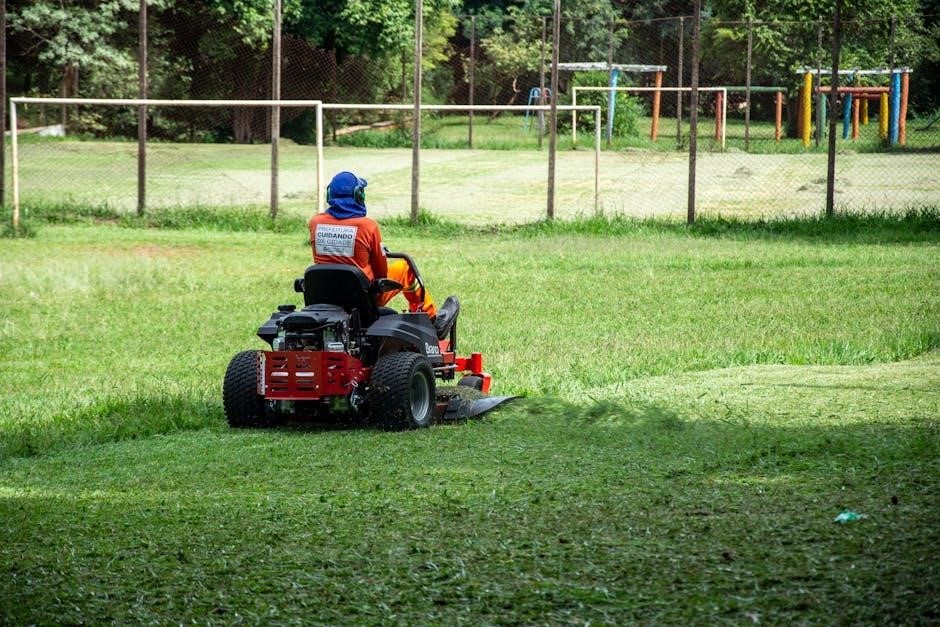
Troy-Bilt Pony 42-Inch Riding Lawn Mower: A Comprehensive Guide
Navigating lawn care with the Troy-Bilt Pony 42 is simplified with readily available resources, including manuals for 42-inch models, belt replacements, and starter motor options.
The Troy-Bilt Pony 42-inch riding lawn mower represents a popular choice for homeowners seeking a reliable and efficient machine for maintaining medium-sized lawns. Its enduring appeal stems from a blend of affordability, user-friendly operation, and readily available parts, making it a practical solution for various landscaping needs. Understanding this mower requires access to comprehensive resources, notably the Troy-Bilt Pony 42 manual, which details everything from initial setup to routine maintenance.
Finding the correct manual is crucial, as variations exist depending on the specific model year and engine type. Online resources frequently offer downloadable versions, ensuring owners can quickly address operational questions or repair concerns. Common issues, like engine starting problems or deck belt replacements, are often covered extensively within these guides. Furthermore, the availability of replacement parts – including belts, starter motors, and even carburetor replacements – contributes to the longevity and cost-effectiveness of the Pony 42.
Model Overview & Key Features
The Troy-Bilt Pony 42 boasts a straightforward design centered around ease of use and dependable performance. Key features include its 42-inch cutting deck, typically paired with a Briggs & Stratton engine – specifications detailed within the owner’s manual. A hydrostatic transmission system provides smooth and intuitive speed control, enhancing the mowing experience. Owners frequently consult the manual for guidance on utilizing these features effectively.
Essential components, like the deck belt (often a 42-inch replacement belt), and the starter motor (commonly a 14-tooth configuration) are readily available, simplifying repairs. The Pony 42’s compatibility with tiller attachments, such as 16-tine sets, expands its functionality beyond basic lawn mowing. Accessing the Troy-Bilt Pony 42 manual unlocks a deeper understanding of these features, ensuring optimal operation and maintenance, ultimately maximizing the mower’s lifespan and value.
Understanding the Components
Detailed diagrams within the Troy-Bilt Pony 42 manual illustrate the engine, 42-inch deck, transmission, and belts, aiding in part identification and repair.
Engine Specifications (Typically Briggs & Stratton)
The Troy-Bilt Pony 42 commonly features a Briggs & Stratton engine, though specific models vary. Manuals detail engine types, often ranging from 19 to 22 horsepower, crucial for understanding performance capabilities. These engines are typically single-cylinder, four-stroke, and air-cooled, designed for reliable operation.
Key specifications outlined in the owner’s manual include displacement (around 344cc to 479cc), oil capacity (typically 1.7 to 2 quarts, SAE 30 recommended), and fuel tank capacity (approximately 1.5 gallons). Understanding these details is vital for proper maintenance, like oil changes and fuel stabilization. The manual also provides torque specifications and recommended operating RPMs, ensuring optimal engine health and longevity. Referencing the manual’s engine section is paramount for accurate information pertaining to your specific Pony 42 model.
42-Inch Deck Construction & Blades
The Troy-Bilt Pony 42’s 42-inch deck is typically constructed from stamped steel, offering a balance of durability and affordability. Manuals emphasize the importance of maintaining blade health for optimal cutting performance. These decks usually employ two or three blades, designed for efficient mulching, side discharge, or bagging – selectable via the mower’s controls.
Blade specifications, detailed in the owner’s manual, include length (around 18-21 inches) and blade bolt torque settings. Regular inspection and sharpening are crucial; dull blades tear grass instead of cutting it cleanly. The manual provides guidance on safe blade removal, sharpening angles, and proper re-installation. Replacement blades are readily available, often specified by part number for compatibility. Maintaining a level deck is also vital, as outlined in the manual, ensuring an even cut across the lawn.
Hydrostatic Transmission System
The Troy-Bilt Pony 42 typically features a hydrostatic transmission, providing smooth and responsive speed control without the need for shifting gears. The owner’s manual details the system’s operation, emphasizing proper pedal usage for forward and reverse movement. Hydrostatic systems rely on hydraulic fluid to transfer power, and the manual stresses the importance of maintaining the correct fluid level.
Troubleshooting sections within the manual address common issues like sluggish response or jerky movements, often linked to low fluid or a clogged filter. Regular checks of the transmission fluid, as outlined in the maintenance schedule, are crucial for longevity. The manual also cautions against operating the mower on excessively steep slopes, which can strain the transmission. Replacement parts, like hydrostatic belts, are available through Troy-Bilt and MTD, with specific part numbers detailed for compatibility.
Maintenance & Repair
The Troy-Bilt Pony 42 manual guides users through essential upkeep, including oil changes, air filter replacements, and blade sharpening for peak performance and longevity.
Routine Maintenance Schedule
Establishing a consistent maintenance schedule is crucial for the longevity and optimal performance of your Troy-Bilt Pony 42-inch riding lawn mower. Refer to your owner’s manual for specific intervals, but a general guideline includes checking the engine oil level before each use.
Every 25 hours of operation, inspect and clean or replace the air filter to ensure proper engine breathing. After every 50 hours, sharpen or replace the mower blades for a clean cut and healthy lawn.
Annually, or after 100 hours, perform a complete oil and oil filter change. Inspect all belts for wear and tear, replacing them as needed – particularly the 42-inch deck belt. Don’t forget to grease all lubrication points. Following this schedule, detailed in the Troy-Bilt Pony manual, will minimize downtime and maximize your mowing experience.
Oil Change Procedures
Performing regular oil changes is vital for maintaining your Troy-Bilt Pony 42’s engine health. Begin with a warm engine – never hot – and disconnect the spark plug wire for safety. Locate the oil drain plug, typically under the engine, and position a drain pan.
Remove the plug and allow the oil to drain completely. Reinstall the plug securely, then add the recommended oil type and quantity, as specified in your Troy-Bilt Pony manual.
Check the oil level with the dipstick, ensuring it falls within the ‘full’ range. Properly dispose of the used oil at a recycling center. Following these steps, detailed in the manual, will ensure optimal engine lubrication and extend the life of your mower. Remember consistent oil changes are key!
Air Filter Replacement
Maintaining a clean air filter is crucial for optimal engine performance of your Troy-Bilt Pony 42. Locate the air filter housing, usually on top or side of the engine, referencing your owner’s manual for precise location. Release any clips or screws securing the cover, and carefully remove the old air filter.
Inspect the filter housing for debris, cleaning it thoroughly before installing the new filter. Ensure the new filter is correctly seated and the housing cover is securely fastened. A clogged air filter restricts airflow, reducing engine power and efficiency.
Regular replacement, as outlined in the Troy-Bilt Pony manual, prevents engine damage and ensures consistent operation. This simple maintenance task significantly contributes to the longevity of your lawn mower.
Spark Plug Replacement
Replacing the spark plug on your Troy-Bilt Pony 42 is a straightforward maintenance task vital for reliable starting and engine performance. Consult your owner’s manual to identify the correct spark plug type for your specific engine model – typically a Briggs & Stratton.
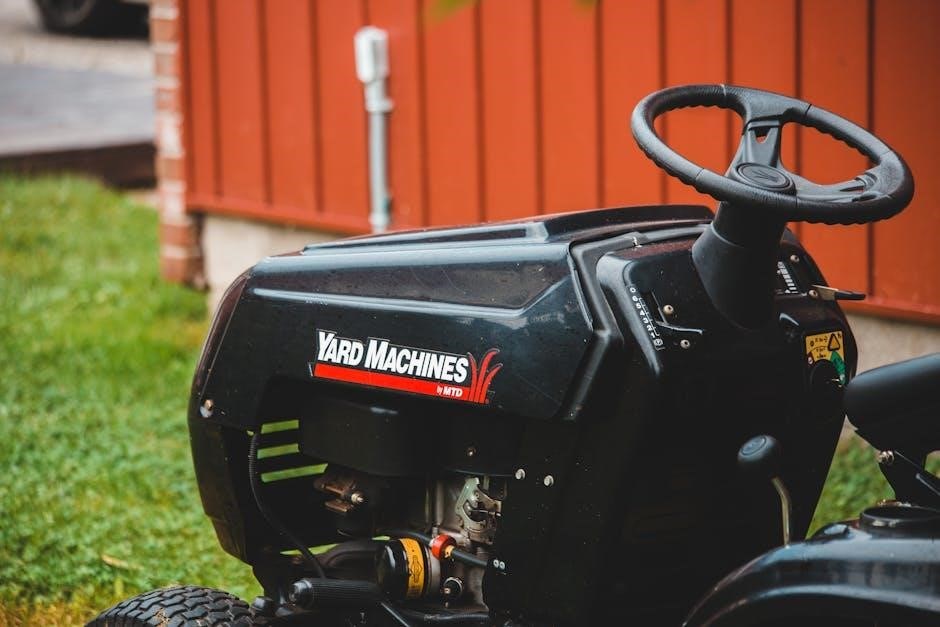
Disconnect the spark plug wire and use a spark plug socket to carefully remove the old plug. Inspect the old plug for signs of wear or fouling, which can indicate engine issues. Gap the new spark plug to the manufacturer’s specifications using a spark plug gapping tool.
Install the new spark plug, tightening it to the recommended torque. Reconnect the spark plug wire securely. A fresh spark plug ensures efficient combustion, contributing to smoother operation and extended engine life.
Blade Sharpening & Balancing
Maintaining sharp and balanced blades is crucial for a clean cut and the health of your lawn. Disconnect the spark plug wire for safety before working on the blades. Remove the blades from the 42-inch deck, noting their position for correct reinstallation.
Sharpen the blades using a file or a blade grinder, ensuring you maintain the original angle. After sharpening, it’s essential to balance the blades. An unbalanced blade causes excessive vibration, damaging the mower and reducing cut quality.
Use a blade balancer to identify heavy spots and remove material until the blade remains level. Reinstall the balanced blades, tightening them to the manufacturer’s specified torque.
Troubleshooting Common Issues
Addressing problems like starting difficulties, transmission concerns, or belt replacements ensures your Troy-Bilt Pony 42 operates efficiently and reliably for years to come.
Engine Starting Problems
Diagnosing starting issues on your Troy-Bilt Pony 42 often begins with the basics; Ensure fresh fuel is present and the fuel shut-off valve is open. A clogged air filter restricts airflow, hindering ignition; regular replacement is crucial. Inspect the spark plug – a fouled or damaged plug won’t create the necessary spark.
If the engine cranks but doesn’t start, consider a carburetor issue. Carburetors can become clogged with old fuel residue, preventing proper fuel delivery. Replacement carburetor options are available, specifically for the 42-inch Troy-Bilt Bronco models. A weak battery or a faulty starter motor (often a 14-tooth design) can also prevent cranking. Verify battery connections are clean and tight.
Consult your owner’s manual for specific troubleshooting steps and diagrams related to your engine model, typically a Briggs & Stratton. Proper maintenance, including regular oil changes, significantly reduces the likelihood of starting problems.
Hydrostatic Transmission Issues
Hydrostatic transmission problems in the Troy-Bilt Pony 42 can manifest as sluggish movement, jerking, or a complete lack of response. Low hydraulic fluid is a common culprit; check the fluid level and top off as needed, using the correct type specified in your owner’s manual. Inspect the drive belt connecting the transmission to the engine – a worn or broken belt will prevent power transfer.
Listen for unusual noises like whining or grinding, which could indicate internal transmission damage. A clogged hydraulic filter restricts fluid flow, impacting performance. Regular filter replacement is essential preventative maintenance. Ensure the linkage between the speed control lever and the transmission is properly adjusted and free of obstructions.
Severe issues may require professional repair or transmission replacement. Always disconnect the spark plug wire before working on the transmission to prevent accidental starting.
Deck Belt Replacement – Detailed Guide
Replacing the deck belt on your Troy-Bilt Pony 42 requires careful attention. First, disconnect the spark plug wire for safety. Engage the blade engagement lever and locate the belt routing diagram – often found on the mower deck itself or in the owner’s manual. Relieve tension on the belt tensioner and carefully remove the old belt, noting its path around the pulleys.
Clean the pulleys before installing the new belt (a 5 x 4.5 FT heavy-duty belt is often compatible). Route the new belt precisely as shown in the diagram, ensuring it’s seated correctly in all pulley grooves. Re-engage the tensioner, verifying the belt is properly aligned and has adequate tension.
Double-check the routing before reconnecting the spark plug wire and testing the mower. A correctly installed belt ensures efficient cutting performance.
Carburetor Problems & Replacement
Carburetor issues on the Troy-Bilt Pony 42 often manifest as hard starting, rough idling, or loss of power. Common causes include a clogged carburetor or a faulty fuel solenoid. Before replacement, attempt cleaning the carburetor with carburetor cleaner, paying attention to jets and passages. Disconnect the fuel line before disassembly.
If cleaning fails, replacement is necessary. A carburetor replacement for a 42-inch Troy-Bilt Bronco (compatible with the Pony) – part number 13WV78KS011 – is readily available. Ensure the new carburetor matches your engine specification. Carefully install the new carburetor, reconnecting all fuel lines and linkages.
Prime the engine and test for proper operation. A properly functioning carburetor is crucial for optimal engine performance.

Parts & Accessories
Essential components like replacement belts, 14-tooth starter motors, and 16-tine tiller attachments enhance the Troy-Bilt Pony 42’s functionality and longevity.
Finding Replacement Parts (Troy-Bilt & MTD)
Sourcing replacement parts for your Troy-Bilt Pony 42 is generally straightforward, as both Troy-Bilt and its parent company, MTD, offer extensive support. Online retailers specializing in lawn mower parts are excellent resources, often listing parts specifically compatible with the Pony 42 model. When searching, utilizing the full model number is crucial for accurate results.
MTD’s parts website is a primary source, allowing searches by model or part number. Local hardware stores and lawn equipment dealers also frequently stock common replacement parts like belts, blades, and filters. For less common items, or if you’re restoring an older unit, online marketplaces can be invaluable. Always verify the part’s compatibility before purchasing, and consider referencing your owner’s manual for part numbers and diagrams. Proper part identification ensures a successful repair and maintains the mower’s performance.
Compatible Deck Belts (Specific Sizes)
Maintaining optimal cutting performance on your Troy-Bilt Pony 42 relies heavily on a correctly sized and functioning deck belt; Commonly, the 42-inch deck requires a specific V-belt size for both the deck drive and blade engagement. Information suggests compatibility with belts designed for LT4200 models and similar 42-inch Troy-Bilt and MTD mowers.
Exact belt specifications can vary, so referencing your owner’s manual is paramount. However, heavy-duty 5 x 4.5 FT belts are frequently cited as suitable replacements. When replacing, inspect the belt routing diagram in your manual to ensure correct installation. Using the wrong size or improperly installed belt can lead to slippage, reduced cutting efficiency, and potential damage to the deck components. Prioritize quality belts for longevity and reliable operation, ensuring a consistently clean cut.
Starter Motor Options (14 Tooth)
When your Troy-Bilt Pony 42’s engine fails to turn over, the starter motor is a prime suspect. A frequently recommended replacement option is a 14-tooth starter motor, specifically designed to fit 42-inch Troy-Bilt Bronco and Pony riding lawn mowers. These replacements are readily available and often marketed as direct replacements for the original equipment manufacturer (OEM) parts.
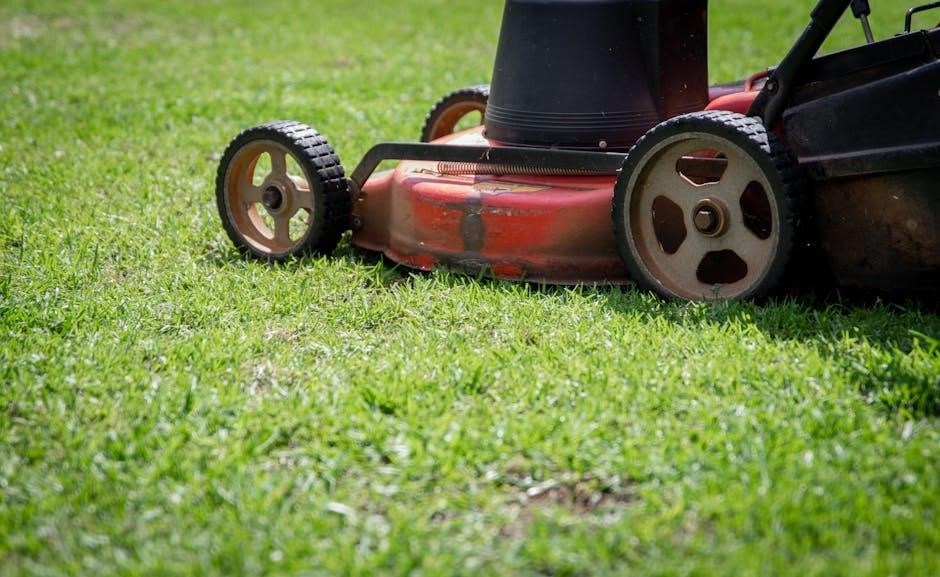
Ensure compatibility by verifying the tooth count and mounting configuration before purchasing. A 14-tooth design provides the necessary gear ratio for efficient engine cranking. Replacing a faulty starter motor can restore your mower’s starting capability, saving you time and frustration. Proper installation, following the guidance in your owner’s manual, is crucial for reliable performance and longevity of the new starter.
Tiller Attachments & Compatibility (16 Tine Sets)
Expanding the utility of your Troy-Bilt Pony 42 beyond lawn mowing is achievable with compatible tiller attachments. Specifically, 16-tine tiller sets are frequently cited as fitting the Troy-Bilt Horse and Pony models, enhancing their versatility for garden preparation. These tillers effectively break up soil, creating ideal conditions for planting seeds or transplanting seedlings.
Compatibility is often indicated by part numbers like 1901118, 1270-1A, and 1270-2A, alongside the 10802 designation. Before purchasing, confirm that the tiller attachment is designed for use with a 42-inch Troy-Bilt riding mower. Proper installation, detailed in the attachment’s manual, is essential for safe and efficient operation. Utilizing a tiller transforms your lawn mower into a powerful gardening tool, saving both time and effort.
Safety Precautions
Prioritize personal safety when operating or maintaining your Troy-Bilt Pony 42; always consult the owner’s manual for detailed guidelines and warnings.
Operating Safety Guidelines
Before each use, thoroughly inspect the mowing area, removing stones, toys, and other debris that could become projectiles. Ensure all bystanders, especially children and pets, are a safe distance away – at least 75 feet – during operation. Always wear appropriate safety gear, including sturdy footwear, eye protection, and hearing protection, as the mower generates significant noise.
Familiarize yourself with all controls and their functions before starting the engine. Never operate the mower if you are tired, ill, or under the influence of alcohol or drugs. Maintain a firm grip on the steering wheel and be mindful of slopes and uneven terrain. Avoid sudden turns or stops, which could cause loss of control.
Always disengage the blades and shut off the engine before making any adjustments or clearing any blockages. Never attempt to adjust the cutting height while the mower is running. Be extremely cautious when operating in reverse, looking behind you to ensure a clear path. Adhering to these guidelines will significantly reduce the risk of accidents and ensure safe operation of your Troy-Bilt Pony 42.
Maintenance Safety Procedures
Prioritize safety during all maintenance tasks. Always disconnect the spark plug wire before performing any work on the mower, preventing accidental starting. Allow the engine to cool completely before handling hot components like the muffler or engine block. Wear work gloves to protect your hands from sharp edges and chemicals.
When changing the oil or fuel filter, use appropriate containers and dispose of used fluids responsibly, following local regulations. Support the mower securely with jack stands if you need to lift it for undercarriage maintenance. Be cautious when working with blades, using thick gloves and ensuring they are securely locked before sharpening or replacing them.
Never modify the safety features of the mower, such as the blade engagement switch or the safety interlock system. Keep the work area clean and well-lit. If you are uncomfortable performing any maintenance task, consult a qualified service technician; Following these procedures ensures a safe and efficient maintenance process for your Troy-Bilt Pony 42.